MobilLaboratory

The laboratory comes to the sample

Mobile laboratories · container, truck, van, caravan

We design and build mobile laboratories for biosafety work up to BSL-3 and BSL-4 cabinet lines, PCR diagnostics, public health screening, mining and chemistry, fuel analysis and CBRN response. Each one runs off-grid on solar power with full climate control, from desert heat to mountain winter.

Tractor unit hauling a solar-roofed container laboratory on a desert highway Aerial view of a mobile container laboratory on a truck crossing the desert
UnitML-40 · in transit Outside47.1 °C Lab22.0 °C Solar8.4 kW Battery84 % Example readout
6 lab typesBiosafety, PCR, screening, mining, fuel, CBRN
BSL-2 to BSL-4Containment designed to WHO and BMBL guidance
6 platforms20 ft, 40 ft, 40 ft HQ, truck, van, caravan
−20 to +50 °CDesign ambient range, solar and battery power
Laboratory types

Six laboratories, one build standard

Every type below is built on the same base: an insulated, sealed envelope, stainless steel furniture, seamless PVC floors, at least one 30 × 30 cm hand-wash unit, and power and climate systems sized for the site. What changes is the workflow, the containment and the instruments.

Biosafety container laboratory with Class II biosafety cabinet, stainless steel furniture and blue PVC floorBSL-2 · BSL-3 · BSL-4

Biosafety level laboratories

Containment laboratories for work with infectious agents, from routine microbiology at BSL-2 to high-consequence pathogens at BSL-3, and Class III cabinet-line configurations for BSL-4 work.

Built in

  • Airlock anteroom with interlocked doors
  • Negative pressure cascade with alarms
  • HEPA-filtered exhaust, bag-in/bag-out housings
  • Class II or Class III biosafety cabinets
  • Pass-through autoclave and effluent treatment

Used for

  • Outbreak diagnostics in the field
  • Tuberculosis and enteric pathogen culture
  • Viral haemorrhagic fever sample handling
  • Veterinary and zoonotic disease work

Standards

WHO LBM 4th ed.CDC/NIH BMBL 6th ed.ISO 35001EN 12128EN 12469NSF/ANSI 49
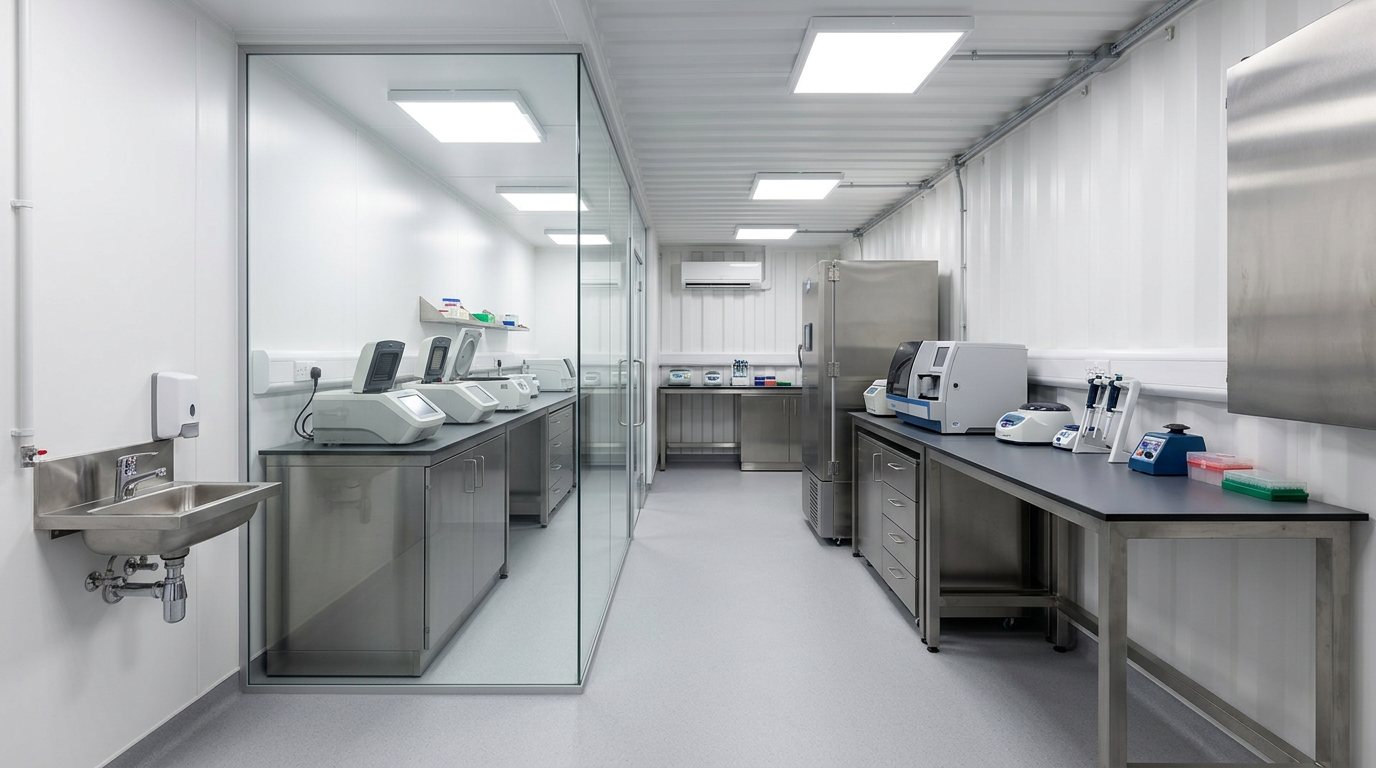
Molecular biology PCR container laboratory with glazed clean room, real-time PCR instruments and grey PVC floorMolecular · qPCR · sequencing

Molecular biology & PCR laboratories

Nucleic acid testing laboratories with a one-way workflow, so amplified product never travels back towards clean reagents. Suitable for respiratory, enteric and vector-borne disease panels, genomic surveillance and food or environmental testing.

Built in

  • Separate rooms for reagent prep, extraction and amplification
  • Positive pressure in clean rooms, negative in amplification
  • UV PCR workstations and glazed partitions
  • −80 °C freezer and cold-chain reception

Used for

  • Real-time PCR and digital PCR
  • Automated nucleic acid extraction
  • Portable sequencing for surveillance
  • High-throughput screening campaigns

Standards

ISO 15189ISO/IEC 17025ISO 20395ISO 14644-1WHO LBM 4th ed.
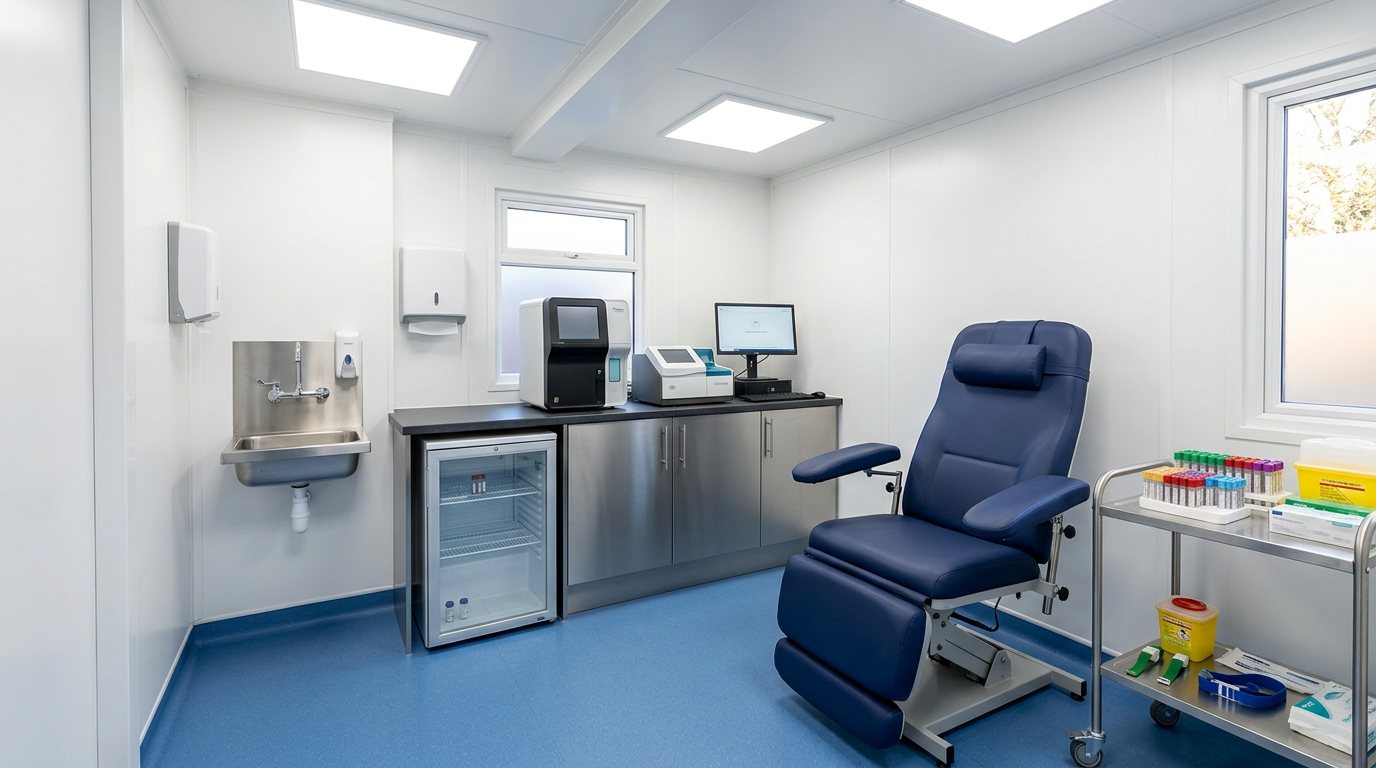
Mobile public health screening laboratory with phlebotomy chair, hematology analyzer and sample refrigeratorPhlebotomy · biochemistry · screening

Mobile public health & screening units

Field units for blood collection, basic biochemistry, hematology, microbiology and infectious disease screening. They take the clinic and the lab to villages, camps, workplaces and border points, and return results the same day.

Built in

  • Phlebotomy chair and patient privacy area
  • Hematology and biochemistry analyzers
  • +4 °C sample refrigerator, sharps and waste handling
  • Data link for results and patient records

Used for

  • HIV, hepatitis B and C, syphilis screening
  • Tuberculosis and malaria testing
  • Diabetes and chronic disease programmes
  • Occupational health checks

Standards

ISO 15189ISO 15190ISO 22870WHO LBM 4th ed.
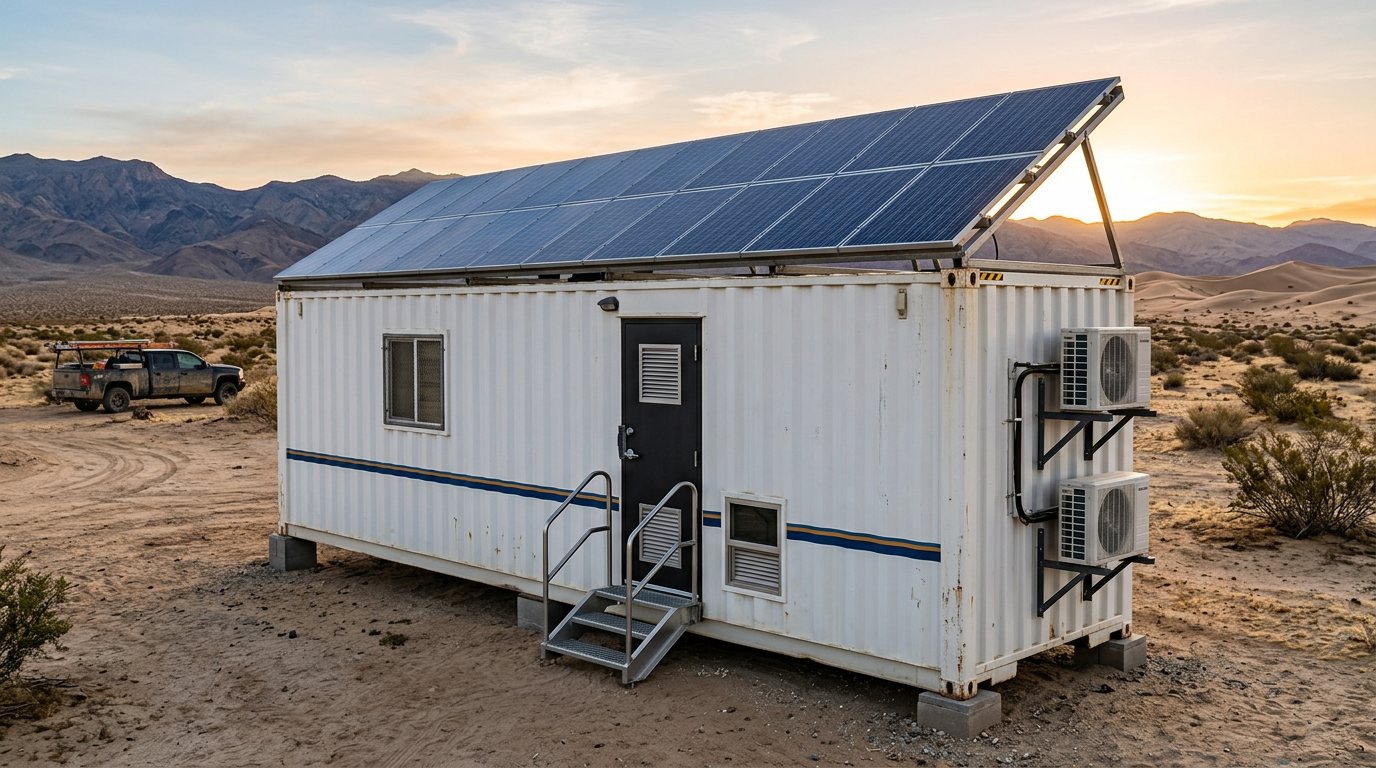
Off-grid container laboratory for mining and ore analysis with solar array, air-conditioning and power cabinetSample prep · assay · wet chemistry

Mining, ore & chemistry laboratories

On-site laboratories for exploration and production, so grade control decisions do not wait for samples to reach a city lab. Sample preparation is kept apart from the instrument room to control dust.

Built in

  • Crushing, pulverising and splitting room with dust extraction
  • Ducted fume cupboards with acid-resistant worktops
  • Drying ovens and balance tables
  • Instrument room with filtered, positive-pressure air

Used for

  • XRF and ICP-OES elemental analysis
  • Atomic absorption and wet chemistry
  • Water and environmental monitoring
  • Process and reagent quality control

Standards

ISO/IEC 17025EN 14175ISO 9001IEC 61010-1
40 ft High Cube container laboratory for oil, gas and fuel analysis on a remote sitePetroleum · gas · fuel quality

Oil, gas & fuel analysis laboratories

Laboratories for oil fields, refineries, fuel depots, ports and military fuel supply. They check incoming and stored fuel against specification on site and follow the safety rules for flammable vapours.

Built in

  • Hazardous-area zoning with ATEX-rated equipment where required
  • Flammable liquid storage and vapour extraction
  • Gas detection and emergency shutdown
  • Anti-static floor finish and earthing

Used for

  • Density, viscosity, flash point, distillation
  • Sulphur by XRF, water by Karl Fischer
  • Gas composition by gas chromatography
  • Diesel, petrol, jet and marine fuel checks

Standards

ISO/IEC 17025EN 590EN 228ISO 8217ASTM D4052 · D445 · D93 · D86ATEX 2014/34/EUIEC 60079
Truck-mounted mobile CBRN laboratory deploying across the desertChemical · biological · radiological · nuclear

CBRN laboratories

Deployable laboratories for the detection and identification of chemical, biological, radiological and nuclear agents. Built for civil protection, armed forces and first-responder agencies that need a confirmed result close to the incident.

Built in

  • Sample receipt through a glovebox or pass-through
  • Negative pressure for sample handling, filtered overpressure for crew
  • Separate chemical, biological and radiological work areas
  • Chain-of-custody and secure data handling

Used for

  • GC-MS identification of chemical agents
  • PCR and immunoassay for biological agents
  • Gamma and alpha/beta spectrometry
  • Environmental sampling after incidents

Standards

NATO AEP-66 (SIBCRA)ISO/IEC 17025WHO LBM 4th ed.ISO 35001
Biosafety

Containment by level

What changes inside a container as the biosafety level rises. Final values are set by the risk assessment for the agents handled and approved by the national authority.

FeatureBSL-2BSL-3BSL-4 (cabinet line)
AccessControlled door, hand-wash unit by the exitAirlock anteroom with interlocked doors, changing areaAirlock, changing and shower area
Air pressureInward airflow where requiredNegative cascade, typically −15 Pa anteroom and −30 Pa lab, with alarmsDeeper negative cascade, continuously monitored
ExhaustRoom exhaustHEPA-filtered, bag-in/bag-out housingDouble HEPA filtration
Primary containmentClass II biosafety cabinetClass II or Class III biosafety cabinetClass III cabinet line (glovebox)
Waste and effluentAutoclave on board or validated transportPass-through autoclave, effluent treatment optionDouble-door autoclave, heat-treated effluent
SurfacesSeamless PVC, stainless steel, Trespa® TopLab PLUSAs BSL-2, plus sealed penetrations and fumigation-ready roomAs BSL-3, with pressure-decay tested envelope
Typical platformVan, caravan, 20 ft40 ft or 40 ft High CubeCoupled 40 ft High Cube units

Pressure values are typical design targets. Every BSL-3 and BSL-4 unit is commissioned and validated on site.

Outside in

From the door to the bench

Every container leaves our workshop as a finished laboratory: sealed and insulated outside, clean and climate-controlled inside. Watch the walk-through, then switch the floor finish to compare both options.

Closed 20 ft container laboratory with roof solar panels in the desert Container laboratory with doors open showing stainless steel benches and blue PVC floor Inside a 20 ft microbiology container laboratory with blue PVC floor Inside a 40 ft PCR container laboratory with grey PVC floor
On site · ambient 47 °C · no grid
00:00
Site
Doors
Entry
Inside
Floor
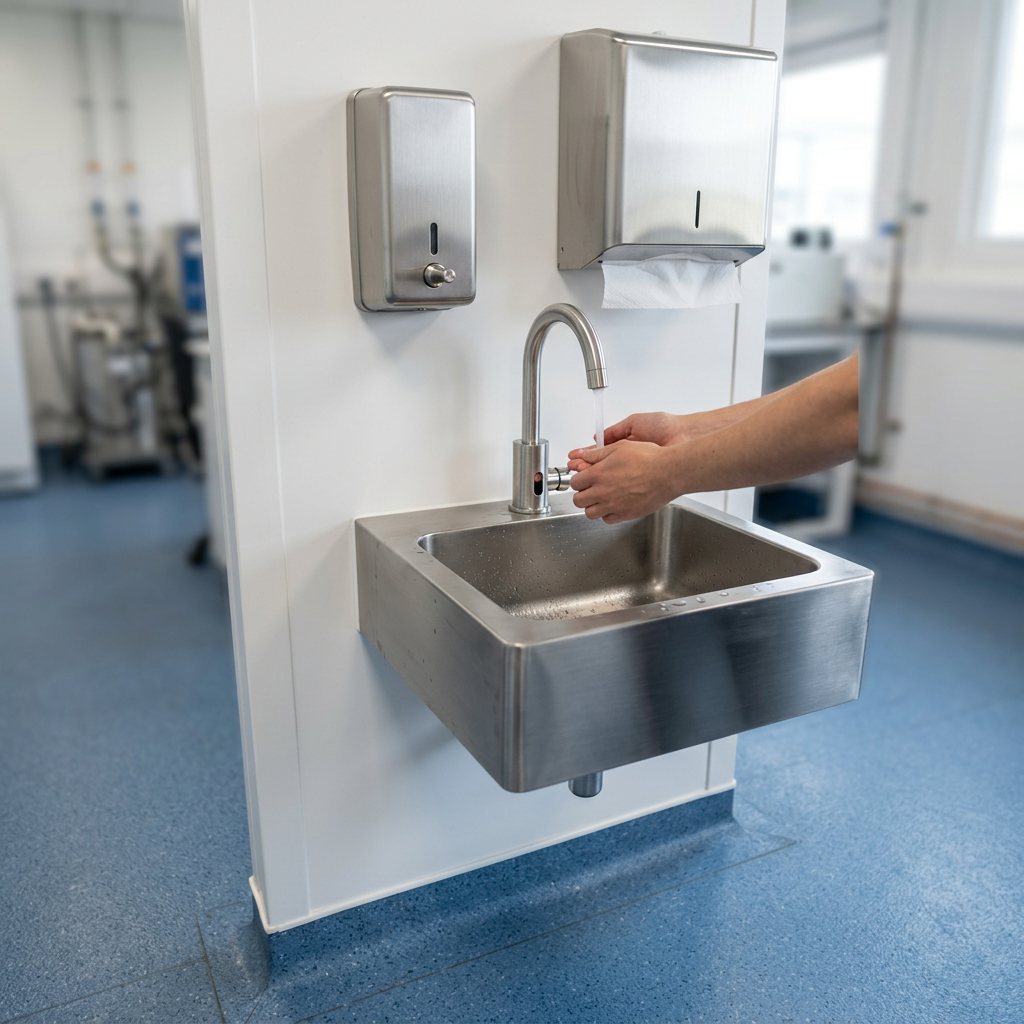
30 × 30 cm stainless steel hand-wash basin with sensor tap30 × 30 cm · AISI 304
Hygiene

Hand-wash unit

At least one 30 × 30 cm stainless steel hand-wash basin with sensor tap in every container, placed by the exit.

Furniture

Stainless steel

AISI 304 base units, drawers and wall cabinets. Trespa® TopLab PLUS worktops on welded steel frames where chemicals are handled.

Floor

Seamless PVC

Welded and coved up the walls, chemical resistant and easy to disinfect. Blue or grey.

Platforms

Six ways to move a lab

Same interior standard on every platform. Choose by how far the lab has to travel, how fast it has to arrive and how much bench space the work needs.

Chassis Built on Scania, Mercedes-Benz, Volvo, MAN and other leading tractor and van platforms, or on the chassis brand you choose.
Off-grid operation

Built for heat, dust and no grid

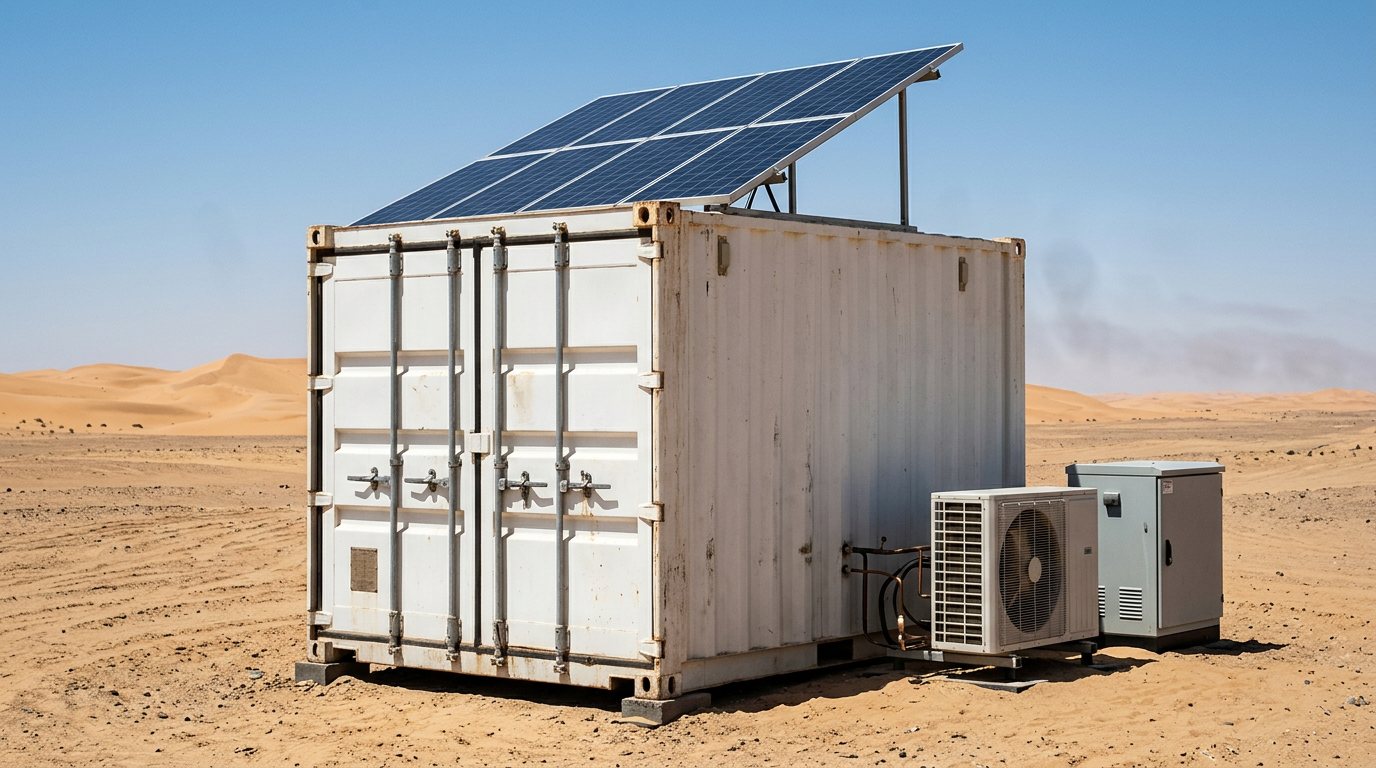
Our container labs are designed for places with sand, sun and no reliable power. The roof makes the electricity, the battery carries the night, and the climate system keeps samples, instruments and staff at working temperature.

Container laboratory on a desert site with roof solar panels, air-conditioning condenser and battery cabinet
Roof solar array6–12 kWp, tilt-mounted Standby generatorDiesel, auto-start Hybridinverter Battery bankLiFePO₄, 20–60 kWh Lab + climateEquipment · HVAC · lights
Ambient range
Designed for −20 °C to +50 °C outside air
Inside
20–24 °C, humidity controlled, filtered supply air
Envelope
60–100 mm insulated sandwich panels, reflective white exterior
Dust
Sand-trap louvres, G4 + F7 filtration, HEPA where the work needs it
Water
Onboard clean and waste tanks with pump, or site connection
Electrical
Installation to IEC 60364, UPS for critical instruments
Autonomy
Solar and battery sized to run the lab day and night without a grid

Typical configuration. Every unit is sized to its site, its equipment list and its climate.

Standards & guidance

The references we design to

Each laboratory is designed with reference to the standards that apply to its work. Accreditation of the laboratory itself, such as ISO 15189 or ISO/IEC 17025, is held by the operator; we build the facility so that it can be achieved.

Biosafety & biorisk

Containment

WHO Laboratory Biosafety Manual, 4th ed.
Risk-based approach to biosafety, core and heightened control measures
CDC/NIH BMBL, 6th ed.
Biosafety levels 1 to 4 and facility requirements
ISO 35001
Biorisk management for laboratories
EN 12128
Containment levels of microbiology laboratories
EN 12469 · NSF/ANSI 49
Performance of microbiological safety cabinets
Quality & testing

Laboratory quality

ISO 15189
Medical laboratories, quality and competence
ISO 15190
Medical laboratories, requirements for safety
ISO 22870
Point-of-care testing
ISO/IEC 17025
Competence of testing and calibration laboratories
ISO 20395
Performance of qPCR and dPCR methods
Facility & transport

Build & mobility

ISO 14644-1
Cleanroom air cleanliness classes
EN 14175
Fume cupboards
ATEX 2014/34/EU · IEC 60079
Equipment for explosive atmospheres
IEC 60364 · IEC 61010-1
Electrical installations and laboratory equipment safety
ISO 1496-1 · CSC
Freight container construction and safe transport
NATO AEP-66 (SIBCRA)
Sampling and identification of CBRN agents
How a unit is made

Brief to field

01

Brief & risk assessment

Workflow, agents or samples handled, equipment list, climate, access roads and power on site.

02

Engineering

Layout, containment zoning, HVAC and pressure design, solar sizing and drawings for approval.

03

Build & factory test

Fit-out in our workshop, then a factory acceptance test with power, climate and pressure systems running.

04

Deploy & validate

Delivery by road or sea, commissioning on site, validation support and training for the lab team.

FAQ

Common questions

What is a mobile laboratory?

A mobile laboratory is a complete, self-contained laboratory built into a shipping container, truck trailer, van or caravan. It carries its own benches, equipment, climate control, power and water, so testing can be done where the samples are instead of shipping samples to a fixed lab.

Can a container laboratory reach BSL-3?

Yes. A BSL-3 container laboratory uses an airlock anteroom, a negative pressure cascade, HEPA-filtered exhaust, sealed penetrations, a Class II or Class III biosafety cabinet and on-board decontamination. It is designed with reference to the WHO Laboratory Biosafety Manual and the CDC/NIH BMBL, and is commissioned and approved under the rules of the national biosafety authority.

How is a mobile laboratory powered without a grid?

A roof-mounted solar array of 6 to 12 kWp charges a LiFePO₄ battery bank of 20 to 60 kWh through a hybrid inverter. A standby diesel generator starts automatically when needed, and the lab can also be connected to site power.

Which vehicle brands can be used?

Tractor units from Scania, Mercedes-Benz, Volvo, MAN, BMC, HABAS, SANY, FAW and others. Van laboratories on Mercedes-Benz, MAN, Volkswagen, Iveco, Ford, Fiat, Citroën, Toyota, Hyundai, Geely, SAIC, Foton, FAW, DFSK and others. Any brand can be used on request.

Which standards apply?

It depends on the lab type: WHO Laboratory Biosafety Manual, CDC/NIH BMBL, ISO 35001, EN 12128 and EN 12469 for biosafety; ISO 15189, ISO 15190 and ISO 22870 for medical testing; ISO/IEC 17025 for testing laboratories; EN 14175 for fume cupboards; ATEX and IEC 60079 for flammable atmospheres; ISO 1496 and the CSC convention for containers; NATO AEP-66 for CBRN sampling and identification.

Can container laboratories be shipped by sea?

Yes. Laboratories built in ISO 20 ft, 40 ft and 40 ft High Cube containers keep their corner castings and travel by ship, rail and road like any other freight container. On site they are placed by crane or side-lifter.

Contact

Tell us where the lab needs to go

Send us your request. We reply with a platform recommendation, a layout and a delivery plan.

0 / 1000 · minimum 50

By sending this form you agree that TEZGEN LABORATUVAR will use your details only to answer your request, in line with KVKK and GDPR.

Company name

TEZGEN LABORATUVAR SİSTEMLERİ İÇ VE DIŞ TİCARET LİMİTED ŞİRKETİ

Address
Merkez Mah. Ayazma Cad. Papirus Plaza No: 37
İç Kapı No: 161, Kağıthane / İstanbul
34406 Türkiye
Messaging